
Dr. Yuanchao Su
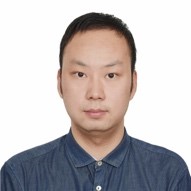 | Yuanchao Su Xi'an University of Science and Technology, China Research Area: Hyperspectral Remote Sensing Image Processing, Deep Learning, Machine Learning, Population Intelligence Algorithms, Hybrid Image Element Decomposition, Hyperspectral Image Classification, Remote Sensing Data Target Detection Web: https://chxy.xust.edu.cn/info/1209/5158.htm IEEE Senior Member。2019年12月毕业于中山大学,获地图学与地理信息专业博士学位;2020年1月起就职于西安科技大学遥感科学与技术系,讲师,目前作为国际电气和电子工程师协会遥感社区(IEEE GRSS)成员担任IEEE Transactions on Cybernetics、IEEE Transactions on Image Processing、IEEE Transactions on Geoscience and Remote Sensing、IEEE Geoscience and Remote Sensing Letters、IEEE Journal of Selected Topics in Applied Earth Observations、remote sensing、Journal of Applied Remote Sensing、IET Image Processing等多个计算机与遥感领域SCI期刊审稿人。截止2023年7月,以第一作者或通讯作者身份发表学术论文20余篇,其中ESI高被引论文1篇,最高单篇引用189次,单篇最高影响因子19.118,获国家发明专利1项,实审阶段发明专利2项。目前主持国家自然科学基金1项,省部级基金项目2项,2020年11月获西安科技大学硕士生导师资格。 |
Speech Title & Abstract
Title: Coupled Dense Convolutional Neural Networks for Unsupervised Hyperspectral Image Super-Resolution
Abstract:
Hyperspectral remote sensing image contains rich spectral information. However, the spatial resolution of hyperspectral imagery is often lower than other remote sensing data. Recently, hyperspectral super-resolution technology has been developed to meet the needs of engineering applications. This new technology can mitigate many problems from the lower original spatial resolution. Nowadays, the development of deep learning provides various paths to design super-resolution methods and facilitates the development of related technologies. Recently, a densely connected convolutional network (DenseNet), a sophisticated tool used for predictions in deep networks, has found applications in various fields. Inspired by DenseNet, we propose a coupled dense convolutional neural network (CoDenNet) to achieve an unsupervised super-resolution approach to serve hyperspectral remote sensing images. The proposed CoDenNet comprises three autoencoders that work together to acquire endmembers and abundances. Two of these three autoencoders have been designed explicitly for learning the parameters of the point spread function (PSF) alongside the spectral response function (SRF). On the other hand, the third autoencoder fosters connections between different types of imagery: HSI and MSI. We demonstrate the effectiveness and competitiveness of the proposed approach in comparison with other super-resolution (SR) and fusion methods.
报告题目:基于耦合密集卷积网络的无监督高光谱遥感图像超分辨率重建方法
摘要:
高光谱遥感图像包含丰富的光谱信息。然而,高光谱遥感图像的空间分辨率往往低于其他遥感数据。近年来,为了满足工程应用的需要,研究人员们发展出了高光谱遥感超分辨重建技术。这种新技术可以缓解原始空间分辨率较低带来的许多问题,从数据本身解决了高光谱遥感应用过程中出现空间分辨率不足的问题。近年来,深度学习的发展为超分辨重建技术设计提供了许多新的途径和理论,也进一步促进了超分辨率重建技术的发展。最近,深度学习领域出现了一种稠密连接卷积网络(DenseNet),在特征传递、防止梯度消失问题方面有很好的优势,而且在很多领域都有成功应用。受DenseNet的启发,我们提出了一种耦合密集卷积神经网络(CoDenNet)来实现高光谱遥感图像的无监督超分辨率重建。新提出的CoDenNet由三个自动编码器组成,它们一起工作以获取端元和丰度。这三个自编码器中的两个被用于学习点扩展函数(PSF)和谱响应函数(SRF)的参数。第三个自动编码器促进不同类型的图像之间的联系,例如:高光谱图像与多光谱图像。最后,我们将新方法与其他经典超分辨率重建方法进行了对比。通过定量与定性的实验证明了新方法的有效性和竞争力。